April 2026
What your spouse REALLY wants
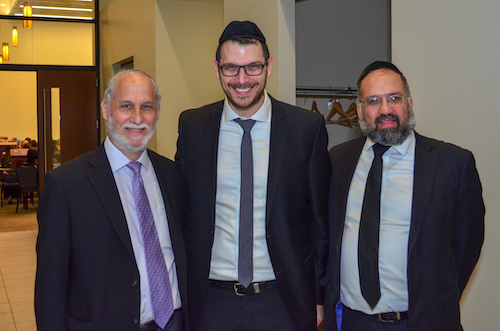
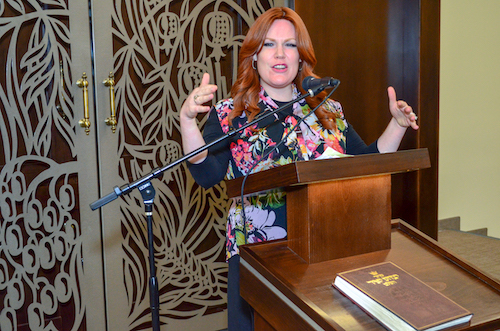
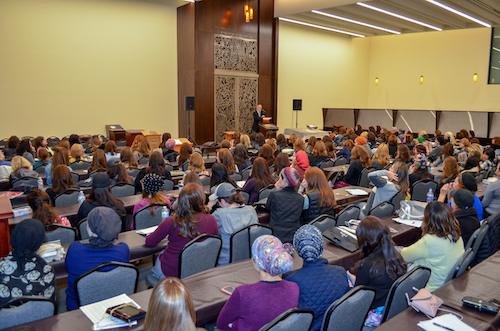
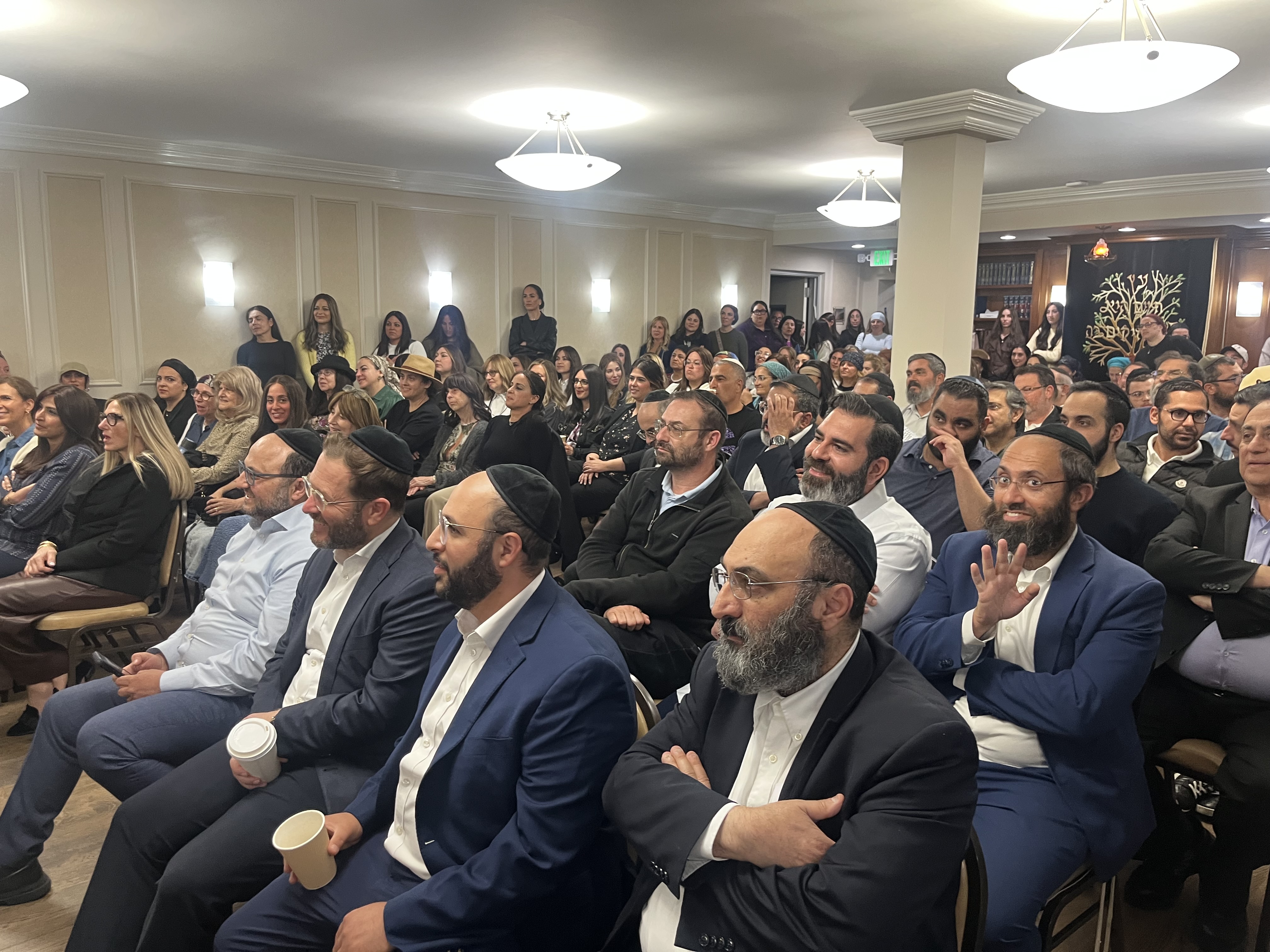
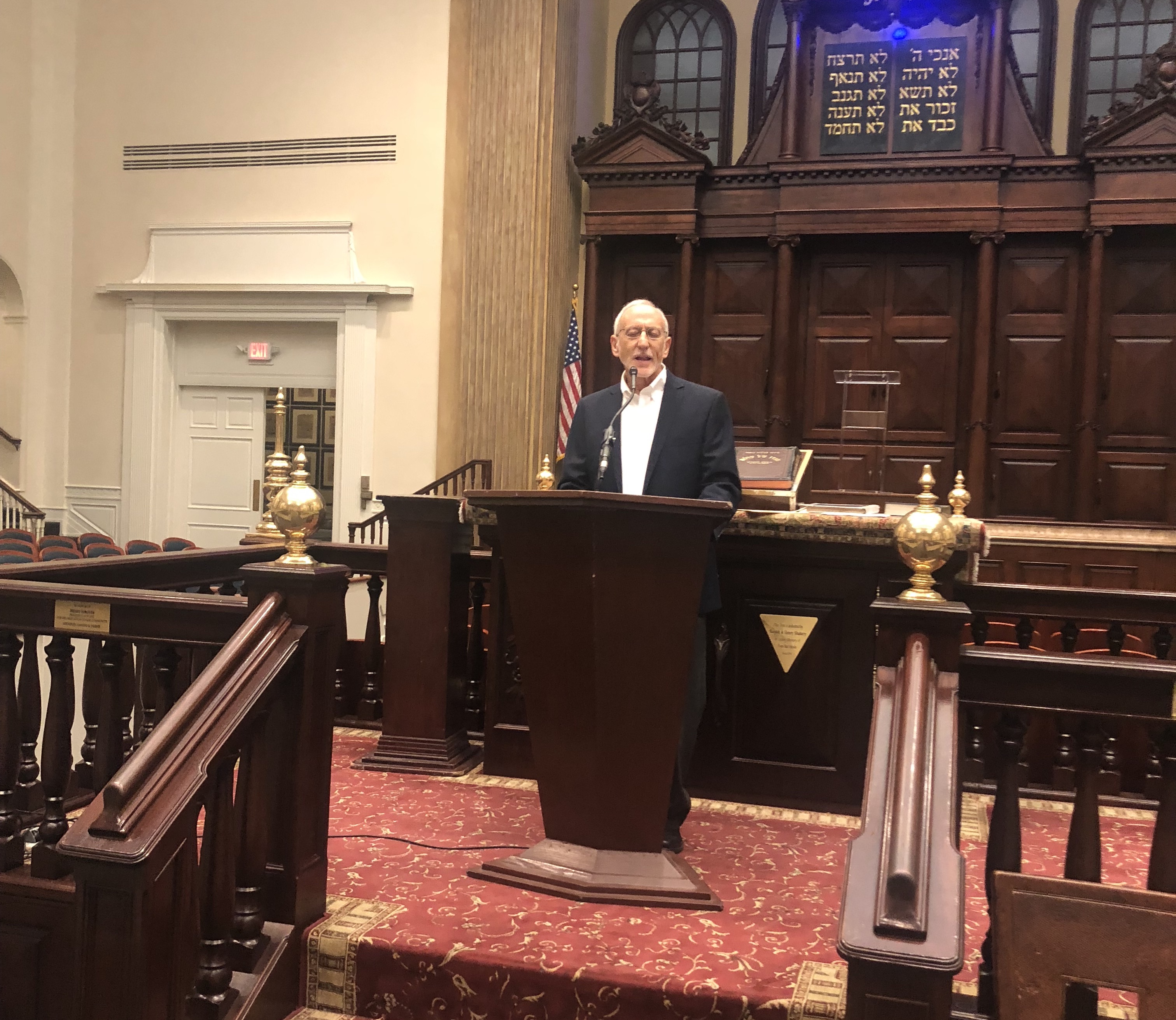
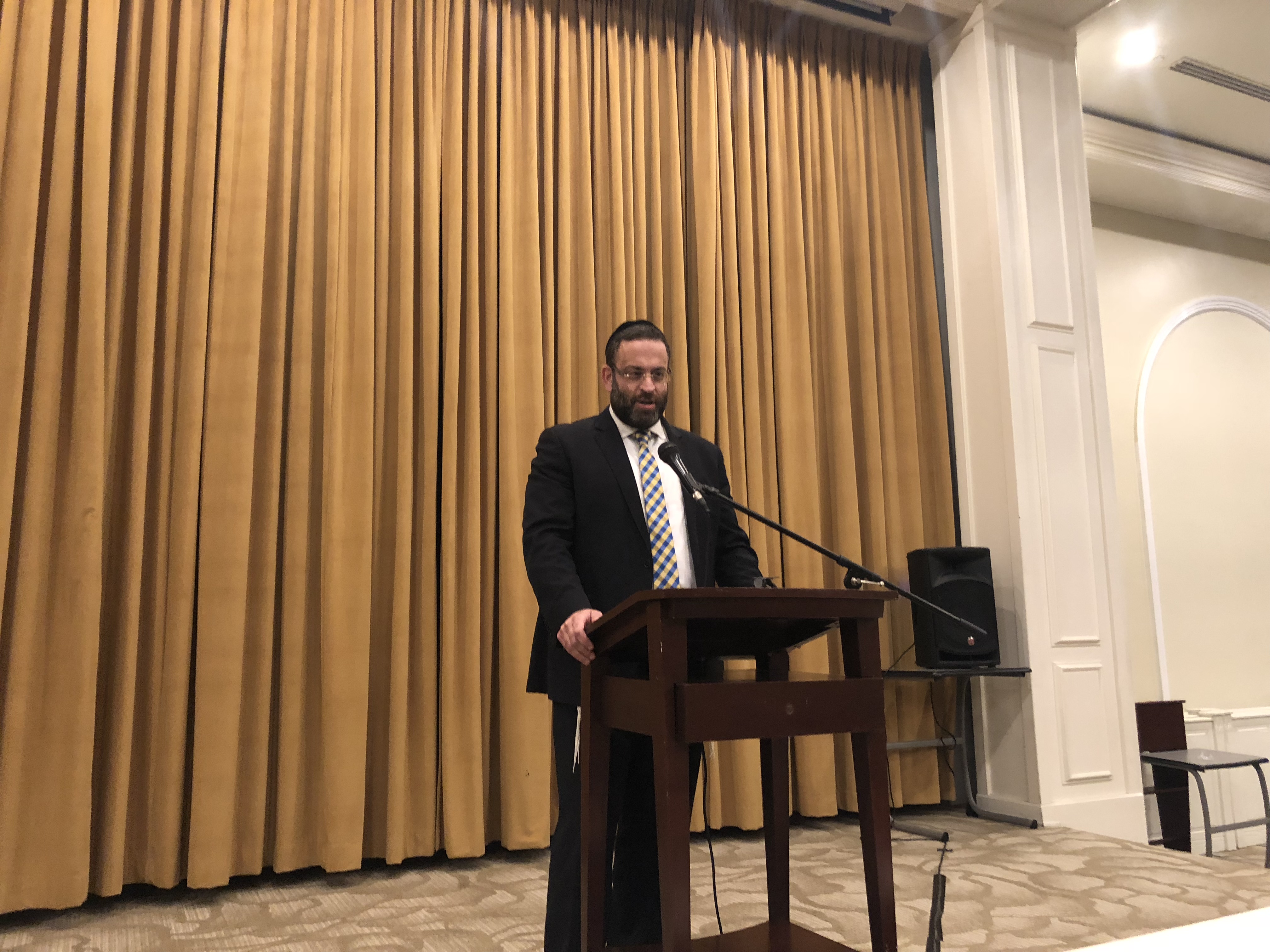
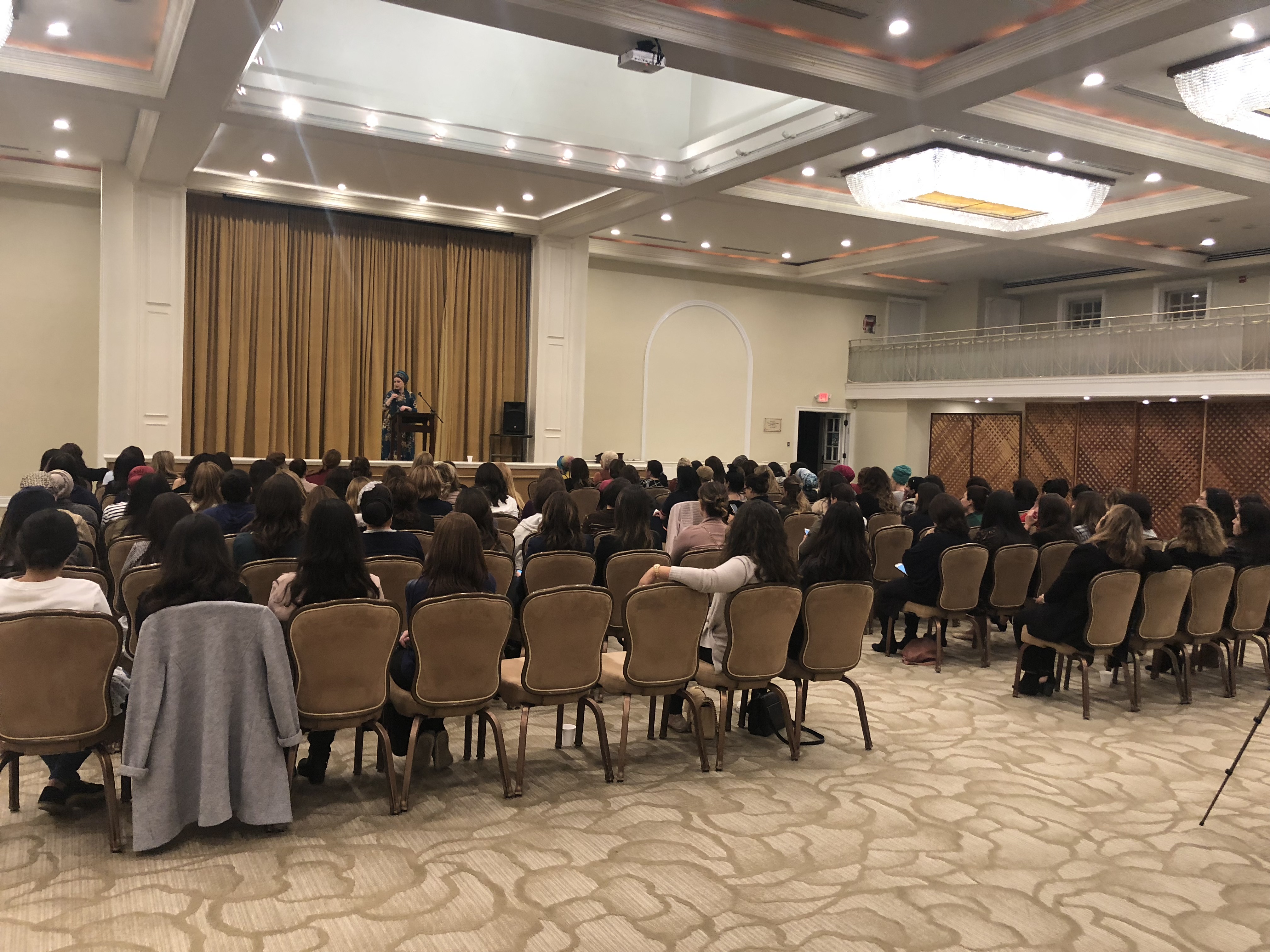
An overpacked audience was treated to a humorous and poignant lecture by one of America's top rabbinic speakers - Rabbi Joey Haber. The honored guest flew in from Brooklyn to address a standing room only crowd at Beth Jacob Congregation, and immediately connected to the audience from the start.
Rabbi Haber posed the following question, "We didn't choose our siblings, we didn't choose our parents, so there might be a reason why we may not get along with them. But what reason would we have for not getting along with the only person we chose in our lives - our spouse?" Indeed, prodding the audience as to the percentage of marriages that rise to a high level of satisfaction, Rabbi Haber concluded that many marriages do not succeed as well as they should. He proceeded to give his unique solution to having a happy marriage - understanding your spouse's needs and responding to them.
Using funny, but to the point, examples, Rabbi Haber underscored the need for spouses to accept each other's weirdness and struggles instead of fixing them. Hear your spouse's emotions, listen and understand. You can be what is generally considered a good husband or a good wife, but if you are not fulfilling what your spouse considers important to them, you may be heading in the wrong direction in your marriage. For example, Rabbi Haber outlined a scenario of a family dispute over money. But, he pointed out, the dispute was not really about money at all, but rather a lack of understanding of each other's viewpoint of how money should be spent. The underlying sentiment of the lecture was to respect something that your spouse wants even if you don't understand it. Know what they are thinking - and showing understanding and empathy for your spouse's feelings will carry the day. A recording of the lecture is attached below.
December 2025
Avoiding dumb mistakes in your marriage
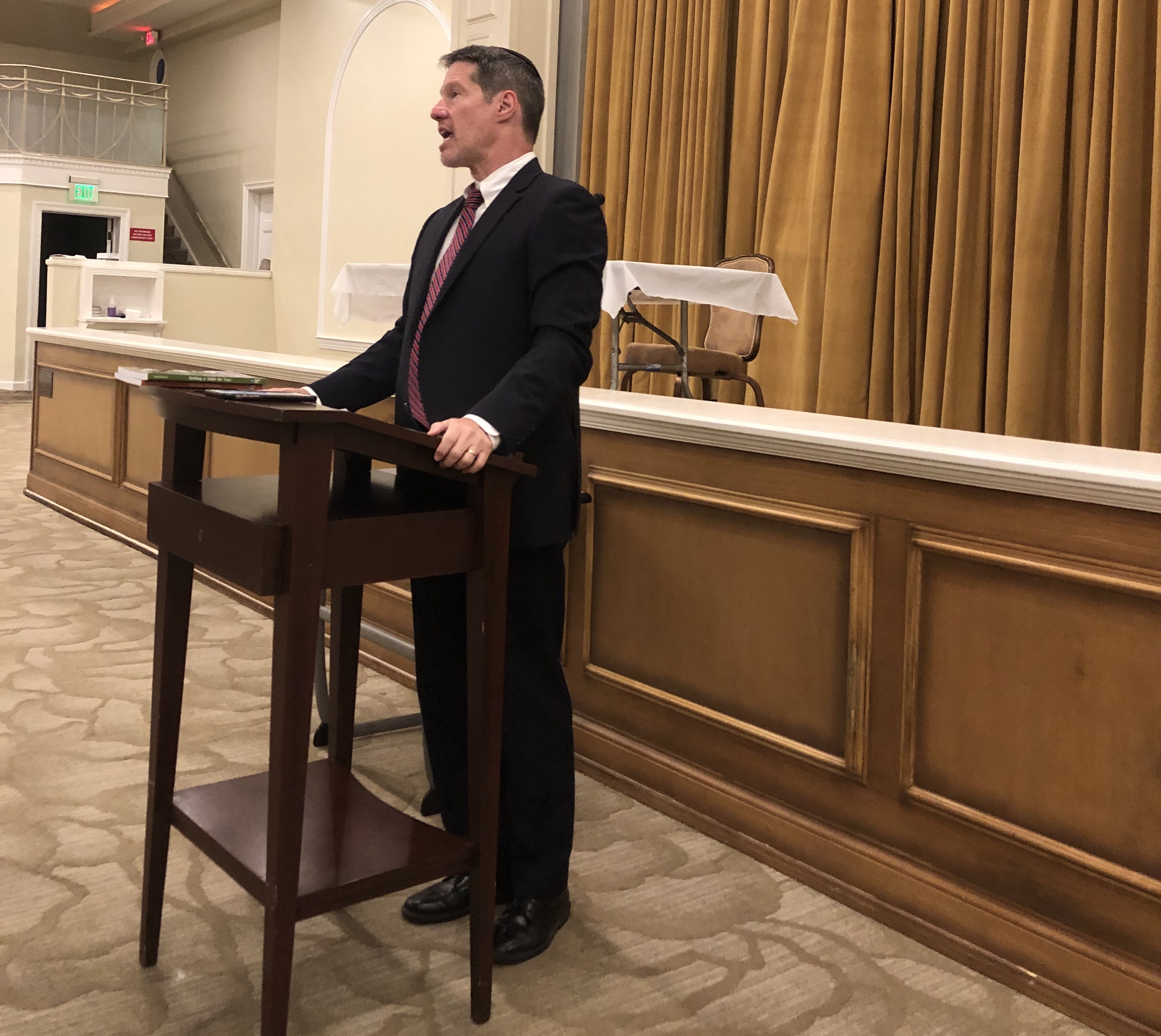
As winter approached, Rabbi BenTzion Shafier joined us from New York to deliver a lively interactional lecture on shalom bayis. Rabbi Shafier is the founder of The Shmuz, an organization dedicated to marital harmony. He is the author of the popular book entitled "10 Really Dumb Mistakes that Very Smart Couples Make."
Rabbi Shafier did a masterful job of incorporating Judaic tradition and common sense in his one hour lecture. He pointed out that matches are indeed made in heaven and God does NOT make mistakes. The fact that the divorce rate has increased from 6% in 1901 to around 50% nowadays does not mean that God has lost his touch. This unfortunate trend is based on several human factors. One of those is that nowadays everything is disposable, including your spouse. Selfishness, emotional fragility and lack of understanding also contribute to marital friction.
Rabbi Shafier reminded the audience that shalom bayis is holy and cited several examples from the Torah to buttress this. He went on to explain the three pillars of marriage and how we can build these pillars together. The key to marriage is one word - LOVE. But love is something that, like a plant, needs to be nurtured and kept alive. Love does not operate on autopilot. Spouses need to constantly do things together and take time to work on the relationship. There was an energetic back-and-forth with the audience throughout the lecture, which was well attended at Beth Jacob Congregation. Reading Rabbi Shafier's book is a must for couples who wish to avoid "really dumb mistakes." The video of the lecture can be seen below.May 2025
Making a Relationship Work
Rabbi Mordechai Teller returned for part two of his relationship series. He outlined 4 things that make for a good relationship.
The first is Positive Thinking. Foster a positive self image. The better you feel about who you are, the less you will be threatened by any perceived differences. If a conflict arises, before launching into combat mode, adopt a positive approach involving compromise and open mindedness. Share positive events in your life. Too often, we focus on the negative things that affect us without taking time to appreciate all of the goodness that Hashem has bestowed upon us. Reminisce on times of laughter. Bring up positive things from your past that conjure up good feelings.
Second is Communication. Share your ups, but share your fears and downs. Being vulnerable can be scary, but it's part of communication. Your partner can't know how you feel if you don't tell them. No one is a mind reader! Don't make assumptions, talk things out. Keep in mind that every couple will have fights over something. But fight healthily with clear communication and listen to what your partner is saying rather than trying to overpower them. Third is Positive Reinforcement. This is the act of continuing to make it clear that you love and appreciate your partner. You need to continue working on your relationship forever! Encourage and support your partner. Surprise your partner every now and then. Keep romance alive, both spiritually and physically. Fourth is Be Yourself. Have your own interests and pursuits. Your likings do not have to exactly match those of your spouse. And finally, take care of yourself. You know your physical and psychological needs and limitations. If you don't care for your body, no one else can. All in all, Rabbi Teller's talk gave a great overview of how to make a relationship work in a real, practical sense.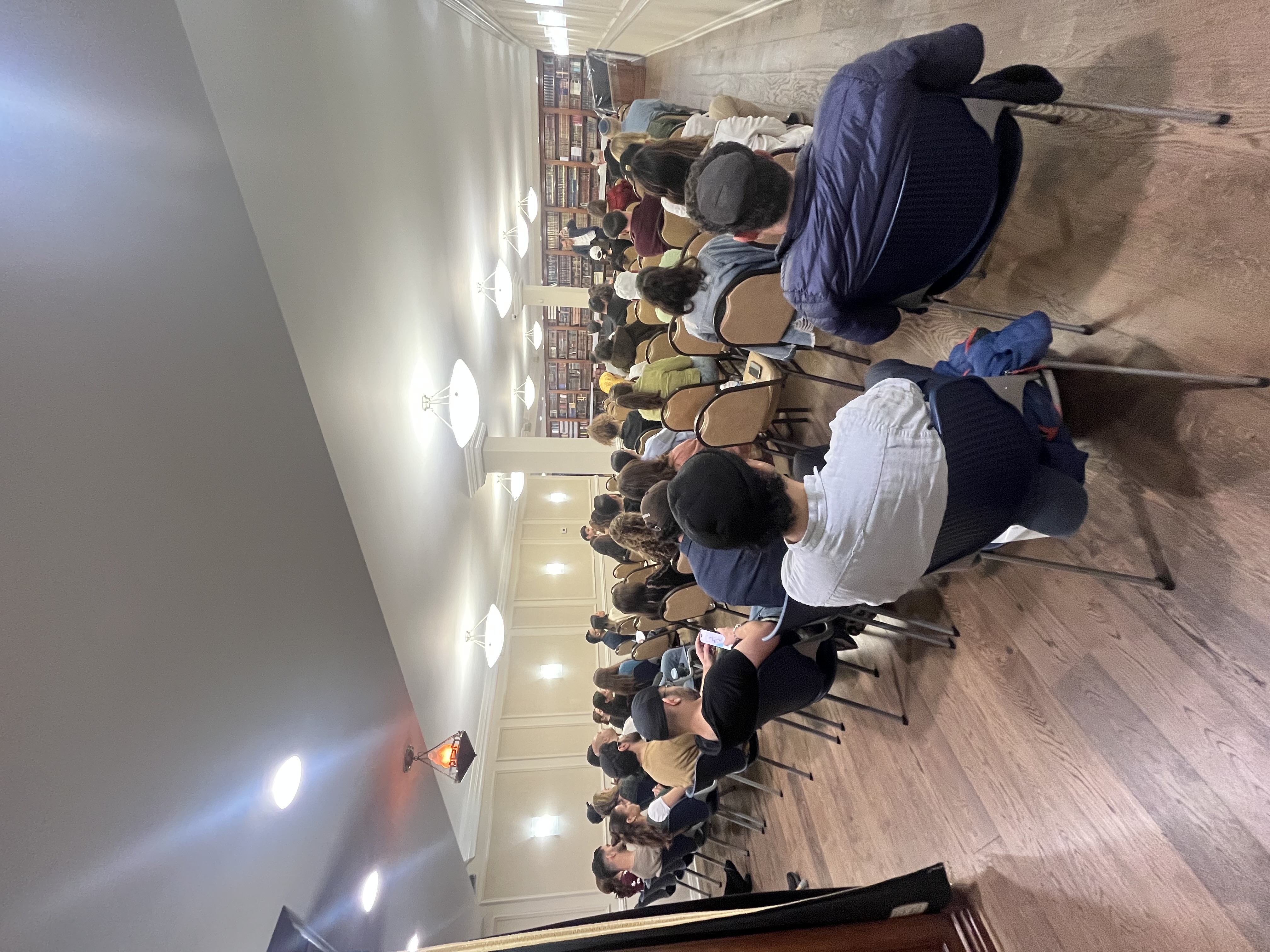
March 2025
In Pursuit of the Perfect Relationship
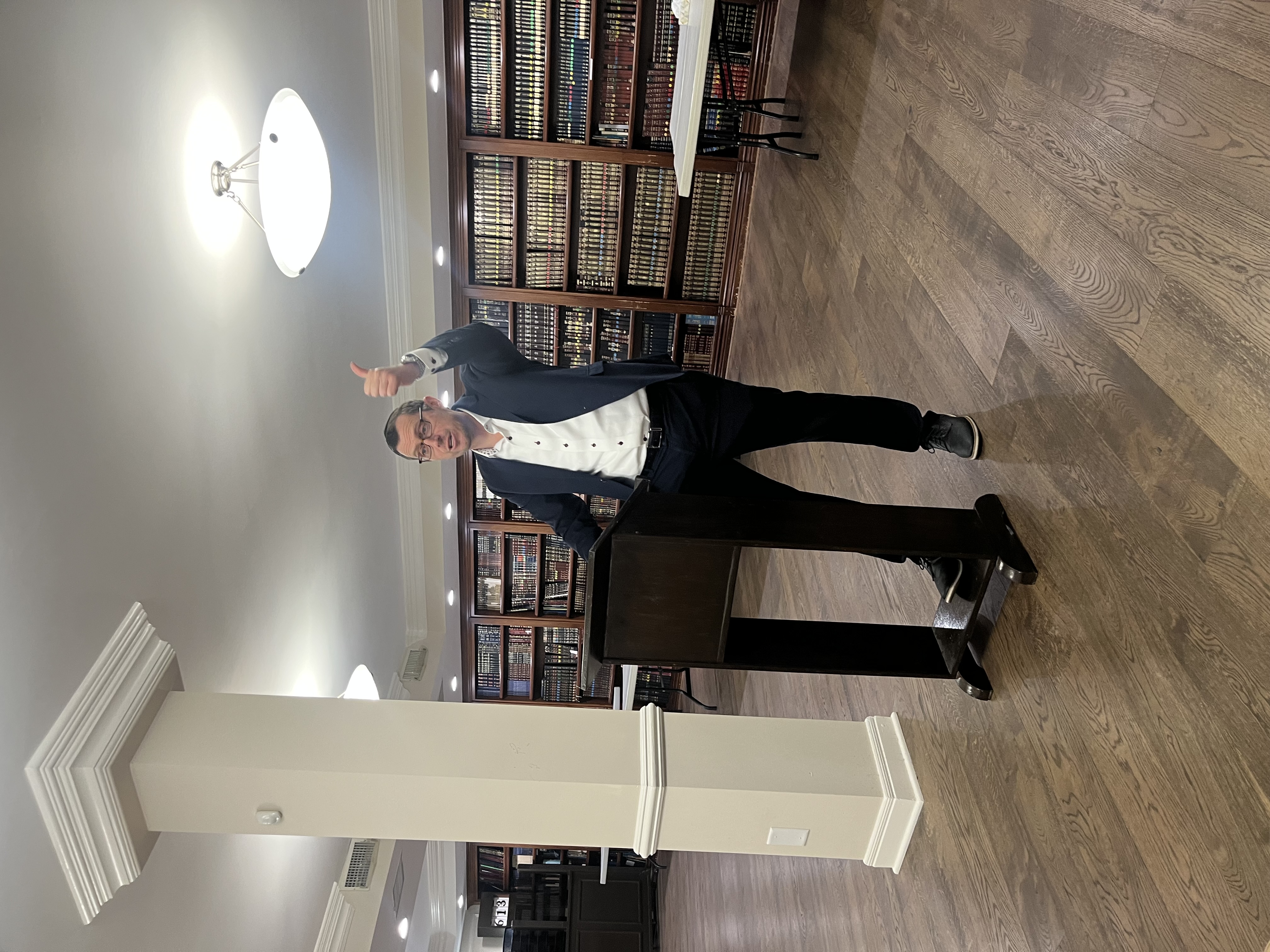
Rabbi Mordechai Teller was welcomed to host a two part series at Beth Jacob Congregation. Rabbi Teller, the founder of JHub LA and a certified life and relationship coach, addressed the title ":In Pursuit of the Perfect Relationship" in an interactional lecture together with the audience.. He pointed out that since we ourselves are all imperfect beings, a perfect relationship does not exist. So, rather than asking whether a perfect relationship exists, we should be asking how we can cultivate healthy, supportive and enduring relationships that respond to the imperfections of life.
In his years as a relationship counselor, Rabbi Teller found that what makes happy couples successful is that they recognize the uniqueness of their partner, have no plans to change each other, and learn to live with the inevitable differences that come with any relationship. Many issues, especially ones that are perpetual (i.e. dealt with over and over again), need to be managed, not solved. It's how you handle them that makes the difference. Define your differences in a loving way, and look at the issues that are creating conflict. Name your non-negotiables, but recognize areas that you can be flexible (hopefully more of the latter). Compromise won't always feel perfect, but it's a necessary component, and it can earn the respect of your partner. And realize that the goal is to understand each other, not necessarily to agree on everything.
Rabbi Teller's interactional approach brought out the best in the audience, which featured a good mix of married couples and singles. A lively question and answer period followed the lecture. Ultimately, the idea of a perfect relationship is more of a fantasy than a reality. Dealing with the ups and downs of life in a positive way is what brings people together.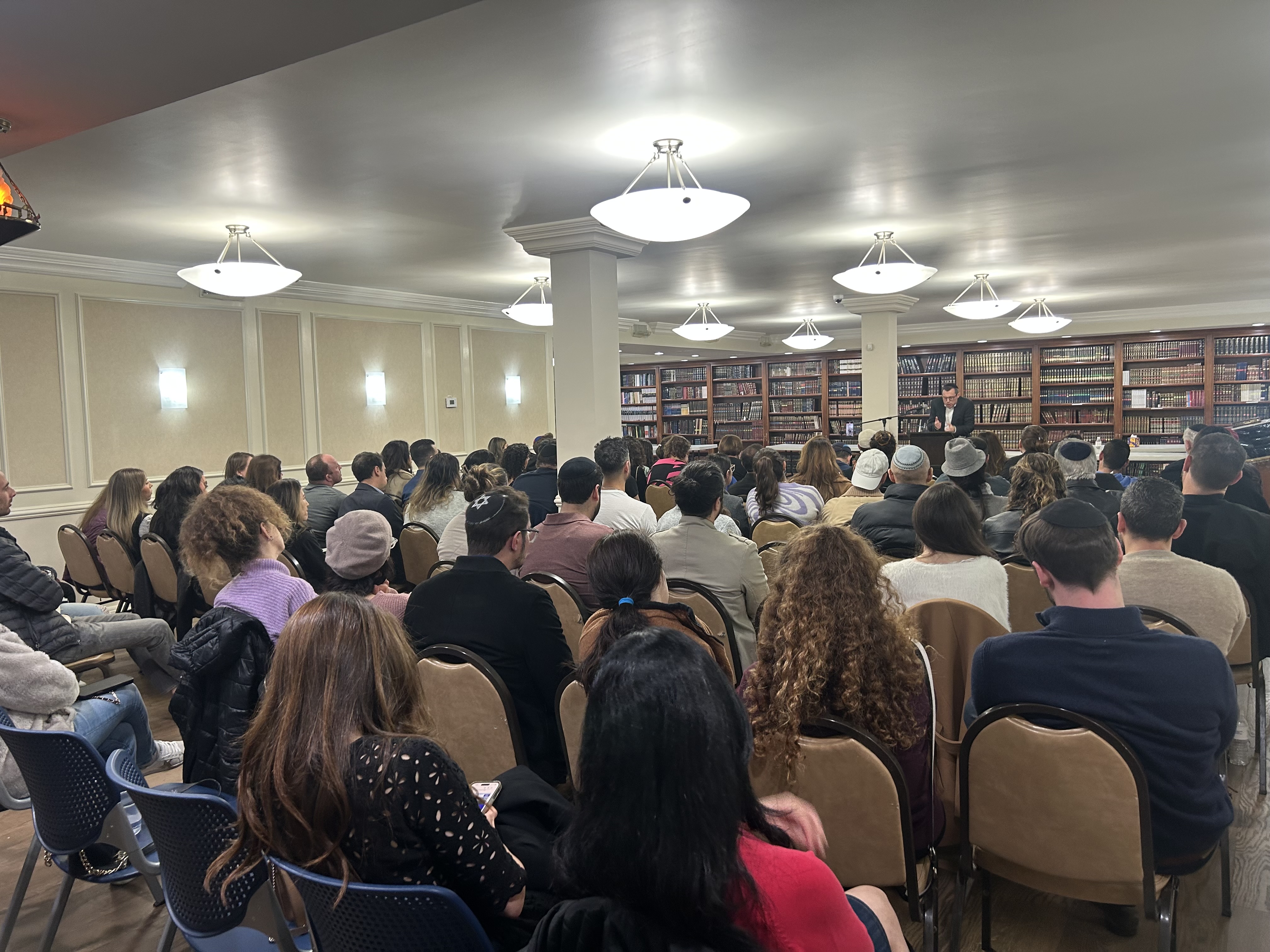
July 2024
It's All In The Torah
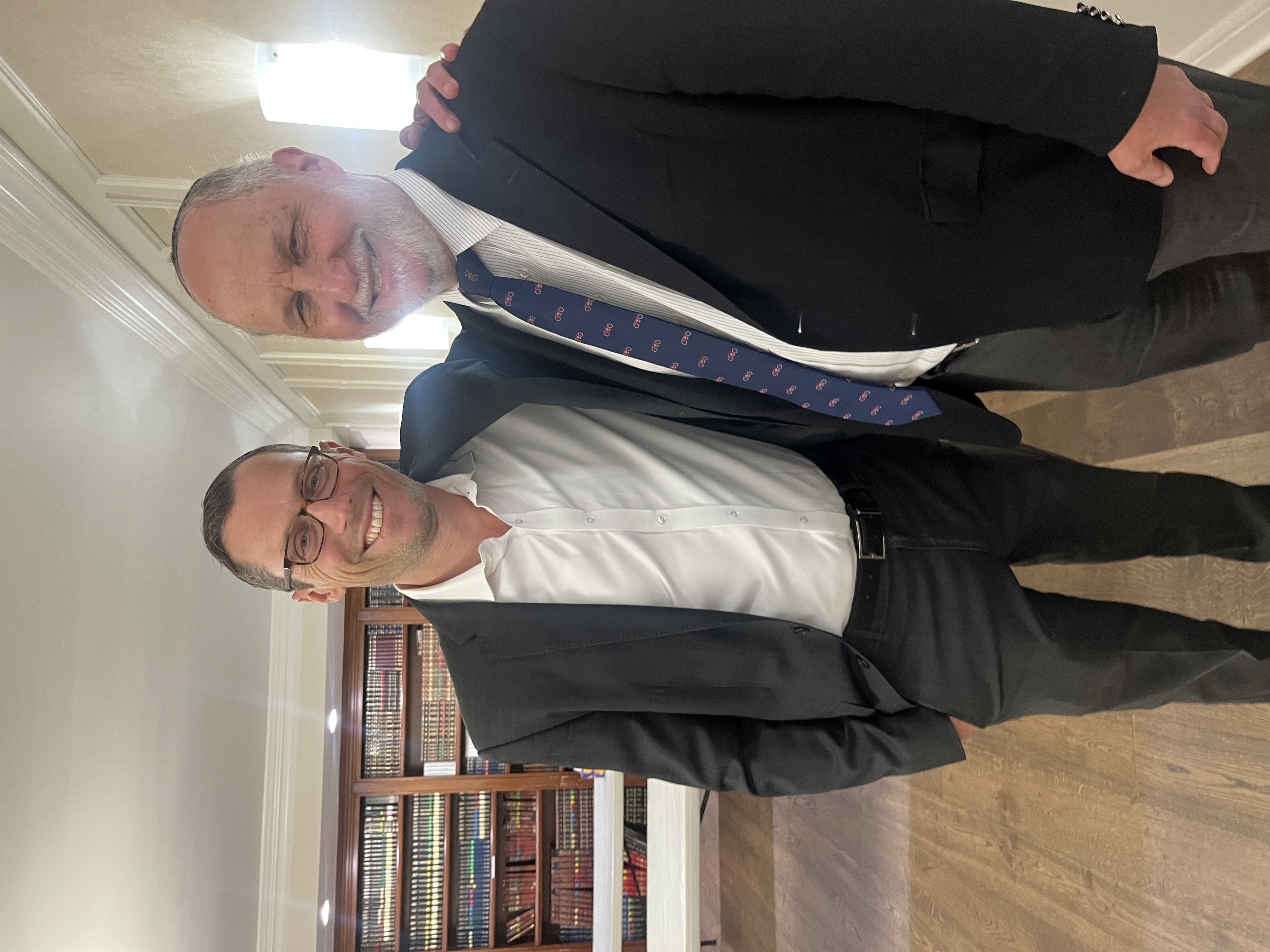
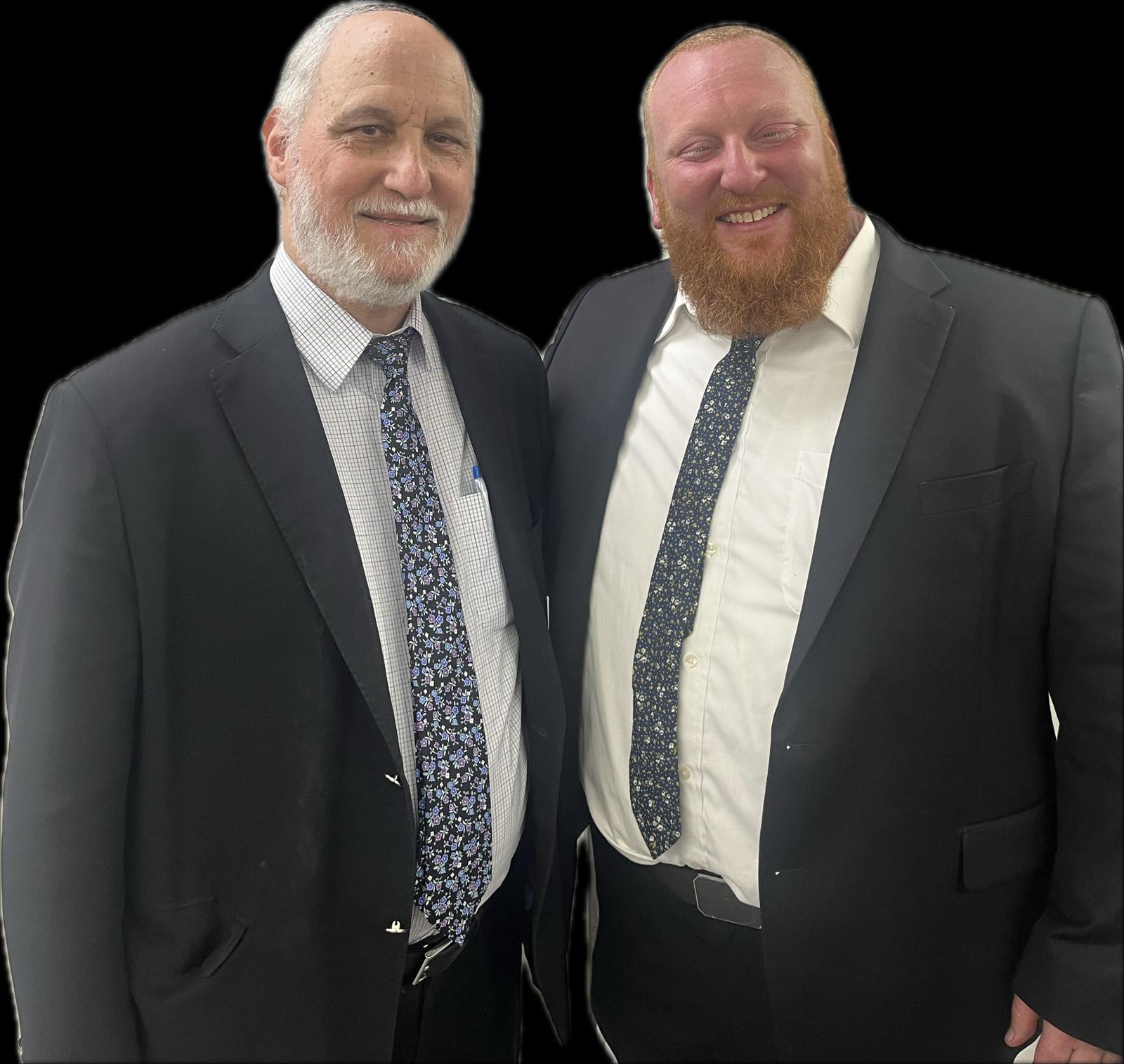
Rabbi Elchanan Shoff gave a warm and welcomed hour long lecture to an overflow crowd at Mesifta Birkas Yitzchok on the Rambam's (Maimonides) rules of marriage.
The Rambam starts off by saying, "Tzivu chachamim", i.e., our sages commanded. In other words, the way spouses are supposed to treat each other are commandments just as strong as keeping kosher or keeping Shabbos. There is a delineation between what a husband is obligated to do an what a wife is obligated to do. For example, a man is commanded to respect his wife more than himself and to love her as much as himself. The Torah recognizes that it is impossible to love someone more than one's own self. And, if fact, this is brought forth in the famous phrase, "V'ahavta l'reacha kamocha.", you should love your friend as much as yourself. As an example, Rabbi Shoff brought forth the famous story of Rabbi Aryeh Levin who accompanied his wife to the doctor. When the doctor asked what was wrong, Rabbi Levin commented, "our leg is hurting us". This feeling of whatever affects your spouse affects you equally is the epitome of the Rambam's ideal.
Husbands are admonished to never be sad or angry. A tall task, for sure, but as the "man of the house" they are to set the tone of calmness and security. The specific language that the Rambam uses is "dibro b'nachas", a husband should speak to his wife with pleasantries. Additionally, a husband should not be cheap, but rather he should be generous with this wife and children.Conversely, a wife has separate obligations to her husband. She is commanded to respect her husband at all times and to make him feel loved. A major point discussed by Rabbi Shoff is that the Rambam emphasizes that a spouse should not withhold intimacy from their spouse as a means of control or revenge. Drawing on the statement from Pirkei Avos, that a man should not engage in excessive chatter with his wife, the real meaning in marital context is to avoid drama. Don't bring up points that trigger your spouse or things that are meant to be hurtful. The peace and serenity of a marriage reflects well on the children who are more likely to grow up confident and emotionally healthy when there is less drama in a home.
FInally, Rabbi Shoff emphasized that even incremental improvements in a marriage are important. A 5%, 2% or even 1% improvement is significant and that improvement can be compounded over time just like interest on your savings.
A recording of the lecture can be found below for your listening pleasure.

February 2024
Intimacy
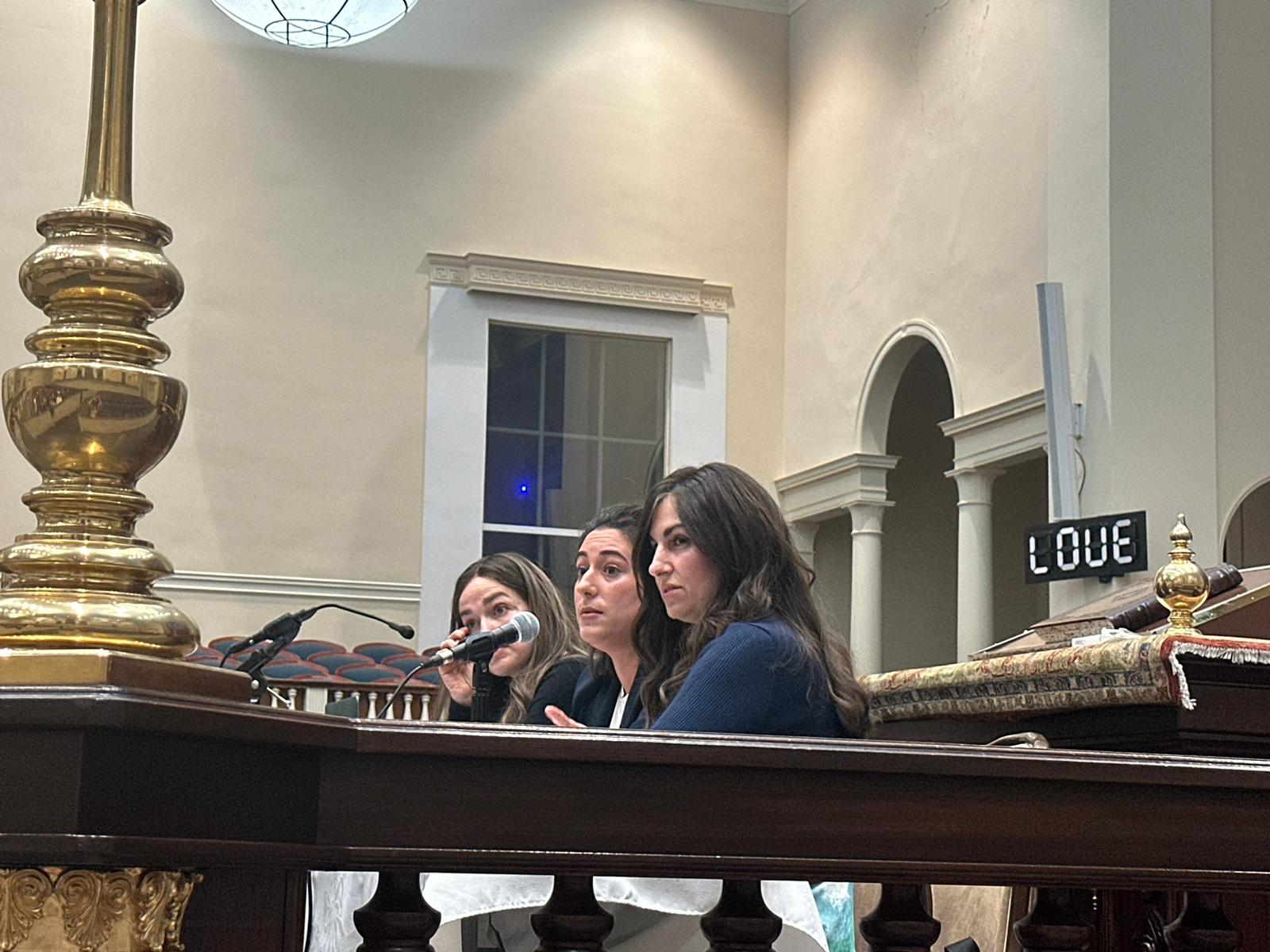
On the subject of intimacy, no less than five experts shared their thoughts. Diana Melnick, a psychologist, Karen Toubi M.D. a gynecologist and Sara Klein, a physical therapist spoke to the women on Sunday night. Mrs. Melnick pointed out that intimacy is a glue that holds our marriage together and encompasses friendship, emotional connection and physical connection. It is important to make sure to give and receive pleasure. Although we all lead busy lives, we must make time for intimacy with our spouses.
Sara Klein gave a detailed anatomic discussion outlining how things can go wrong. Pain during intimacy can have physiological causes and these can be treated if diagnosed correctly. Dr. Toubi went over methods of birth control with rabbinic approval as well as a medical overview of women's hormones. She touched upon topics such as hot flashes, menopause, lubrication, and post partum changes.
Adding a toradic approach, it was mentioned that the Torah states "Adam Yada es Chava", that Adam knew his wife Chava (Eve). In other words, a man should "know" what his wife enjoys and give her pleasure. When husband and wife are united in intimacy, it brings down the heavenly presence to bless the entire family.
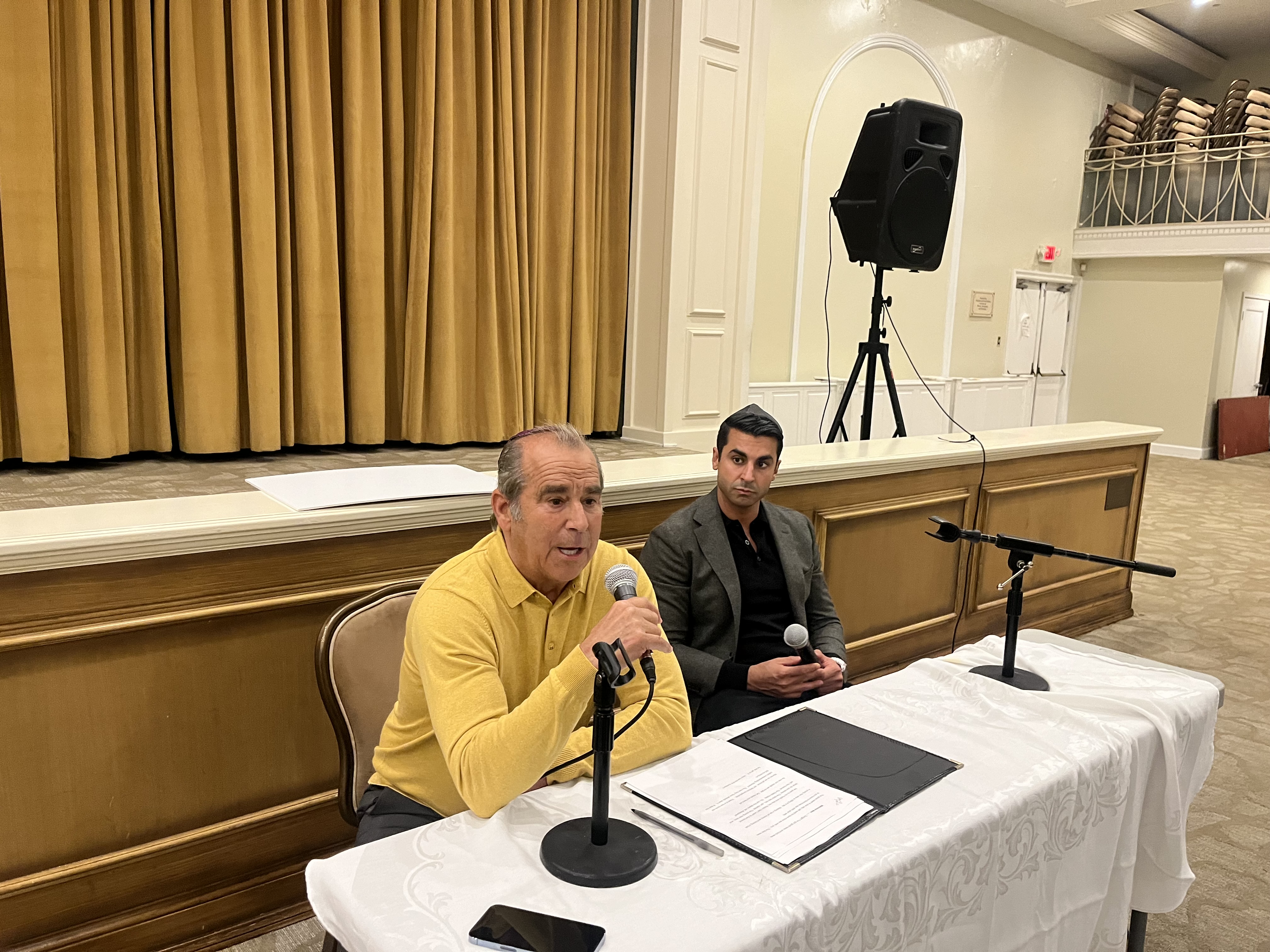
The men's session on Monday was spearheaded by two excellent practitioners - Dr. Mark Brenner, an experienced psychologist and famous author, and Justin Houman M;D., a urologist with a specialty in men's sexual health. Dr. Houman discussed the use of oral medications such as Viagra and Cialis as well as their potential side effects. Dr. Brenner elaborated on the importance of touch in everyday interactions with one's wife to effectuate an emotional bond. Women have the need to feel safe, and a simple hand on the back while crossing the street is a good example of this. A man must be patient and listen to his wife's "bucket of problems" that reside in her head in order to connect emotionally with her. Validating her feelings, rather than seeking solutions, is the key.
Both Dr. Brenner and Dr. Houman emphasized the importance of both spouses communicating sexual needs and desires without embarrassment. Interestingly, Dr. Houman related that male libido varies not just with emotional and physical situations, but also varies with the time of year, i.e. summer vs. winter. Both doctors warned very strongly against the use of pornography and its devastating long term psychological and physiological effects.
The sensitive topic of intimacy was successfully addressed from many viewpoints to both the men and women. A topic not often addressed, but an important part of shalom bayis.
June 2023
Chizuk for our Marriages
On June 12, 2023, Rabbi David Ashear delivered a much anticipated lecture for our audience. Rabbi Ashear is the host of the popular podcast Daily Emunah and the author of numerous books of the Living Emunah series for children, teens and adults.
Rabbi Ashear began the talk by telling us that shalom bayis brings the shechinah, the holy presence, into our homes. Thus, the more peaceful our homes, the greater the holiness AND the happier G-d is with us.
The lecture then turned from the philosophical to the practical aspects of shalom bayis. Rabbi Ashear gave his personal and heartfelt position that if one party goes above and beyond in making the marriage work, then the other spouse will come around as well when they see and appreciate the sincerity of their spouse.
Part of the marital interaction is understanding how to interpret a conversation. A man speaks to get a point across whereas a woman speaks to get a connection. Thus, the brevity or length of a conversation might very much differ between husband and wife. Additionally, women tend to speak in "hint form" leaving it to the husband to correctly interpret the underlying meaning of the statement - not an easy task for the average man!
Another point that Rabbi Ashear brought out was to compliment each other. Even everyday events such as cooking a meal, going to work, going to daven/learn deserve praise. Give your spouse the emotional support they need.
Rabbi Ashear quoted the Rambam (Maimonides) who stated that a man should love his wife more than himself, whereas a woman should love her husband more than enough. This led into what the great Torah scholar Rav Schach had to say were the three most important things in a marriage - mevater, mevater, mevater (loosely translated to mean "let it go, let it go, let it go). The lecture concluded with the thought that working on shalom bayis is the same, and possibly more important, than working on any other mitzvah or commandment in the Torah.
As one of the participants stated, "I listen to the Daily Emunah tidbits and I feel like it changed my life!" Quite a statement, but easy to understand once you've heard Rabbi Ashear speak.
November 2022
Navigating Challenges
In our first live lecture since the beginning of COVID 2 1/2 years ago, Rabbi Eytan Feiner, the senior rabbi of the famous White Shule (Knesseth Israel) of Far Rockaway, flew in to deliver a powerful address.
Rabbi Feiner opened by pointing out that the standard response to "how are you"? in Hebrew is "Hakol Beseder", i.e. everything is in order. However, Rabbi Feiner said that this response is an allusion to the Seder that we have every Passover. We eat matzah (good) and marror (bitter) to illustrate the good and the bad that we deal with in our daily ways. Life is a struggle, but the end of the Seder we recite Hallel and praise God for all that he gives us.
Serving Hashem even when you are in spiritual or physical pain is our litmus test as Jews.
Life is not easy. Getting up to pray each and every morning is difficult. Earning a living, raising kids, etc. are all challenges that we face. But the strength of a Jew is that he/she never gives up. Our forefather Abraham had 10 tests and passed them all. That is our heritage as we all face tests each day.
Then came the most sobering part of the talk. Rabbi Feiner related the struggle that he and his wife had with infertility. Their dreams of a big family, or any children at all, were slowly fading away. Finally, after 12 long years, they were blessed with a son...a very special needs son who cannot walk or talk. He is 15 years old now and needs constant care. The Feiners accepted their gift from Hashem with happiness. Yes, it is a daily challenge on many levels, but that is our charge as Jews to persevere despite the supposed obstacles in our paths.
Instead of saying, "why me? this is not how I envisioned things", we need to realize that this is what Hashem has prescribed for each and every one of us and it actually is the way life is supposed to be.
Rabbi Feiner stressed the importance of working at shalom bayis. Every time you take your wife out to dinner, it is not a waste of money, but rather you are bringing down the heavenly shechina (presence). Every time you sit down with your spouse over a cup of hot chocolate, it is divinity coming down. Buying gifts, leaving love notes, showing appreciation and affection are all part of the Jewish way.
Many of the participants stayed long after the lecture to share stories and gain support from Rabbi Feiner. His words were truly inspirational and, indeed, transformed people's view of life and themselves.

August 2022
Getting Your Priorities Straight
The 90+ degree heat of summer brought us to a hot topic with a great speaker. Rabbi Maimon Elbaz of Yeshiva of Brooklyn offered a rather graphic zoom presentation to everyone. Not graphic in a negative sense, but rather a talk peppered with slides, pictures and quotes from talmudic and psychological sources. All in all, it was a series of quick, important points regarding how to have a healthy marriage.
Rabbi Elbaz relied upon talmudic sources and real life people to illustrate his talk. For example, the gemara in Yevamos 62A mentions that Rav's wife was very mean to him. However, despite her constant efforts to make his life miserable, Rav would buy his wife presents. His rationale was that, yes, she was not the perfect wife, but she helped bring his children into the world, and for that he was forever grateful.
We've all heard that spending quality time with your spouse is important. Rabbi Elbaz pointed out that Rav Chaim Kaniefsky ZT"L would never eat a meal without his wife. Despite his very busy schedule of learning and meeting with people, Rav Kaniefsky always had time for his wife.
Rabbi Elbaz recounted the famous story of the convert who approached Hillel and told him that he wanted to learn all of the Torah while standing on one foot. Hillel summed up the Torah by saying that you should never do to another person what you don't want done to yourself. One does not have to have a lot of imagination to apply this thought to marriage.
Additionally, Rabbi Elbaz reiterated that "smiles are contagious" and "anger is like idol worship". The first year of marriage, referred to as "shana rishona", can take up to ten years!. It can take that long to fully understand each other's strengths.
The lecture ran overtime, and could have gone on for another hour, but Rabbi Elbaz had imparted a world of advice to the listeners on shalom bayis. As we head into the new year, we have a new impetus to create a home of marital bliss.
Here is a video recording of the zoom event for your viewing pleasure.
March 2022
Chesed Begins in the Home
As we turned our clocks ahead, perhaps for the last time, we marched into spring with a new shalom bayis lecture. Once again on zoom, we welcomed Rabbi Avraham Asher Markovsky, a maggid shiur at Mesivta Nefesh Hachaim in Lakewood and the popular purveyor of " A Daily Dose of Chesed" lectures. To that point, Rabbi Markovsky delivered an excellent discourse on the importance of doing kindness at home. The first thing that needed to be addressed was the actual definition of chesed. We find that the Torah itself defines chesed in the phrase, "V'ahavta l'reyacha kamocha", you should love your neighbor like yourself. Is it possible to love another person as much as one's self? Obviously not. But the performance of this mitzvah of doing chesed is not just a feeling in one's heart, but rather based on action. Maimonides (Rambam) states that the way to fulfill this mitzvah is to give someone a compliment. Reb Chaim Vital takes this a step further and states that showing respect (compliments) to one's spouse is the ultimate chesed.
Rabbi Markovsky eloquently peppered his speech with stories from the Talmudic literature and modern day Torah greats. He related the story of how Rabbi Meir, about two thousand years ago, helped a quarreling couple kick the Satan out of their house. Examples of chesed in the home were gleaned from the actions of Rabbi and Rebbetzin Chaim Kaniefsky, Rabbi and Rebbetzing Yaakov Kaminetzky and other gedolai Yisroel. Ultimately, the main ingredient in a marriage is to show respect for your spouse.
A lively question and answer period followed the lecture, bringing a close to the month of Adar, a month of happiness that hopefully will be punctuated with renewed respect for our spouses.
Here is a video recording of the zoom event for your viewing pleasure.
December 2021
Words From a Wise Marriage Counselor
The year 2021 closed out with an informative and entertaining zoom lecture from Dr. Meir Wikler, a psychotherapist and family marriage counselor with offices in Brooklyn and Lakewood. Dr. Wikler opened the session by encouraging couples to yell at each other. What?? It's not what it seems. He uses the would YELL as an acronym for the following: 1) The focus of improvement should be on Yourself. 2) Do not fail to recognize your failings and say Excuse me without offering explanations on why you goofed up. 3) Listen and ask questions. Arguments occur when there are two speakers and no listeners. 4) Express what you Like and how it makes you feel.
Dr. Wikler lamented that poor communication is the biggest problem in marriage today. Adopting the above techniques enables honest and thoughtful communication which enhances love. Throughout the lecture, Dr. Wikler peppered his presentation with real life stories and chassidic tales to emphasize his points. He artfully addressed several questions at the end of the lecture that elucidated some of the topics covered.
Here is a video recording of the zoom event for your viewing pleasure.
May 2021
Problems With Our Kids (and what to do about them)
Still on zoom due to the pandemic, it was decided to adopt a change to the usual format. Firstly, this was our first session dealing with children. Secondly, a panel of three experts - Dr. Ernest Katz, a seasoned clinical psychologist, Mrs. Annie Statman, a school counselor and private practitioner, and Rabbi Dr. Chaim Tureff, a school administrator all offered their thoughts on a variety of questions.
Dr. Katz put forth that the Torah gives us a structure for life. He likened our brains to the body's hardware and the Torah to the software that gives us a chance to use the hardware. The Torah lays out the challenges that the forefathers and mothers faced. We, too, face challenges and must give our children the ability to cope. Dr. Katz emphasized that we must elevate physical things in this world to a spiritual level.
Mrs. Statman emphasized that parents are models for each other, their children and the community. She spoke at length about dealing with anxiety in children and how to get them through a crisis together. Allegorically, Mrs. Statman likened the "tablet" in our phones as our new tablets from Mt. Sinai. Without proper guidance, using the internet is as dangerous as driving a car before you are ready. It is a useful tool that must be used correctly.
Rabbi Tureff related that the concept of honoring one's parents should be taught in schools as well as at home. He also addressed the causes and treatments of various addictions that affect many children. As Dr. Katz and Mrs. Statman also pointed out, Rabbi Tureff stated that parents are not their children's "buddies", but rather their mentors. To that thought, sometimes children want to spend time with their parents instead of a device.
All in all, each expert responded with wisdom to the questions posed to them. Here is a copy of the video presentation for your viewing pleasure.
Here is a video recording of the Zoom event for your viewing pleasure.
January 2021
Pandemic and Partnership: Unlocking The Power Of Marriage In The Midst Of Turbulent Times
The year 2021 brought in a continuation of the COVD-19 pandemic, but we were able to use the power of zoom lecture to bring in Rabbi Shmuel Silber. Rabbi Silber is the rav at Suburban Orthodox Congregation Toras Chaim of Baltimore, a large synagogue with over 400 families. As such, Rabbi Silber is quite familiar with family issues and the topic of shalom bayis.
Indeed, in defining the words "shalom bayis", Rabbi Silber used a series of biblical passages to illustrate the real meaning of those words. People tend to define shalom bayis as the absence of conflict. Not so, points out Rabbi Silber, as the Torah chronicles conflicts between Adam and Chava (Eve), Avraham and Sarah, Yitzchok and Rivka and Yaakov and Rachel. Each of these special and holy couples experienced areas of conflict, such as Avraham having to banish his son Yishmael from the home at Sarah's direction. This particular conflict was so intense that Hashem himself had to speak to Avraham to listen to his wife in the matter.
Rabbi Silber offered three ways to deal with marital conflict. First, acknowledge that husband and wife look at the world through two different but equal windows. Instead of convincing your spouse that you are correct, try to understand the window through which they are viewing life. Truth in marriage is subjective, not objective. This is illustrated beautifully in the Gemara in Bava Metziah which states that "if your wife is short, bend down to speak to her." In other words, don't expect your wife to stand on a chair to hear you, but rather you should try to speak to her on her own level.
Secondly, in a moment of failure, don't forget all of the accomplishments that your spouse has done. Contextualize conflict so that it is just an isolated event in an otherwise beautiful marriage.
Thirdly, in order to have true shalom bayis, work on yourself. Self actualize. Being in a good spiritual state, via learning or prayer, will put you in a good mental state to deal with your marriage and with life.
Rabbi Silber did emphasize that marital therapy can be quite helpful when needed. Although rabbis can be a first line of airing the problems of marriage, long term solutions are best handled through professional marriage counselors.
Here is a video recording of the Zoom event for your viewing pleasure.
September 2020
New Year's Resolutions For Our Marriages
As the world continued to be paralyzed by the COVIC-19 pandemic, once again we turned to an online lecture instead of an in-person one. Our guest speaker, Yael Kaisman, chimed in from New Jersey to deliver a pre-high holy day lecture on the topic of shalom bayis. Mrs. Kaisman, who has taught at Bruria High School for Girls for forty years, also brought her experience of being a life coach and a frequent lecturer at Sinai and Heritage retreats.
The month preceding the high holy days, Elul, is personified by its Hebrew letters, which form the first letters of the words “ani l’dodi v’dodi li”, “I am to my beloved and my beloved to me.” This phrase from Shir Hasirim is used to convey the dual love between the Jewish nation and Hashem as well as the love between spouses. So strengthening the marital bond at this time of year is more than appropriate!
Mrs. Kaisman focused her talk on how to build strong relationships. She began by pointing out that the Hebrew word for betrothal is “Nisuin”, which literally means to carry. Marriage means carrying the load – to have the ability to cope and tolerate the differences that may arise between spouses. Healthy communication is the key to a solid relationship. Speaking in a threatening or demeaning tone is counterproductive. When there is compassion and understanding, it is a lot easier to smooth out the differences.
Changing one’s nature is a difficult proposition. Part of that process is to acknowledge our own mistakes. And, yes, a full apology goes a long way. Not a partial, “I’m sorry, but…”, rather a sincere effort to change our ways. For, after all, isn’t that what teshuva is all about? Mrs. Kaisman urged everyone not to shut down the “giving” from their spouse. Recognize and appreciate the good. Express it to your spouse. We are all quick to criticize. Are we as quick to praise? Finally, she reminded us not to take what our spouses do for granted. Hard work, be it in the home or outside of the home, should be properly noted and appreciated.
All in all, the hour long lecture was peppered with wise advice, especially coming from someone whose mother was a therapist herself! The talk put everyone in the proper mood to develop the correct embodiment of “ani l’dodi v’dodi li”. A recording of the lecture can be found underneath.
Here's a video recording of the Zoom event for your viewing pleasure.
May 2020
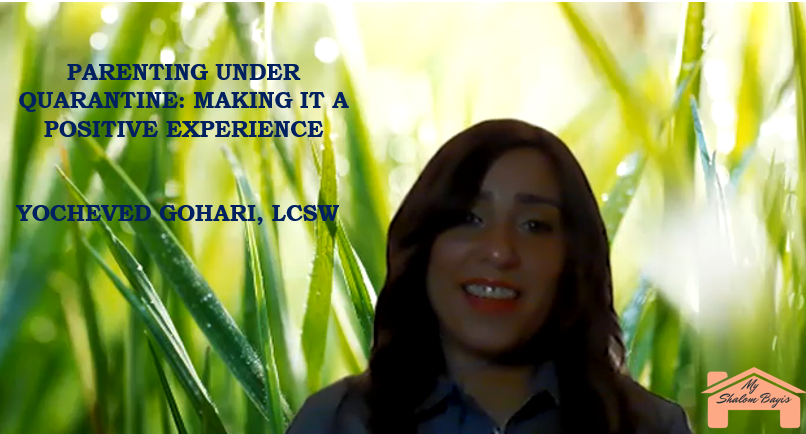
Parenting Under Quarantine
The unfortunate circumstances of the COVID-19 pandemic lead to a lockdown in most states. During this time, it was impossible to have a lecture attended by people, so we took to the internet to connect everyone with a Zoom lecture on how to properly parent under quarantine.
Being with each other 24/7 presents unique challenges for both parents and children. The shalom bayis framework is greatly challenged under these conditions. Thus, our guest lecturer, Yocheved Gouhari LCSW, an experienced therapist from Valley Village, shed some light on how to deal with the situation.
She began her interactive talk with a story of how her family was once trapped in an elevator for several hours. Rather than panicking, Mrs. Gouhari engaged her small children with entertaining games to make the most of the situation. It was a very telling story that gave a perspective on how to react to quarantine.
Mrs. Gouhari then gave an informative slide show on different principles of parenting. When under lockdown, determine how much exposure you want the children to have to media and information. Too much exposure to frightening images of COVID-19 disasters can instill fear into children who do not know how to process the information. Additionally, the dangers of the internet lurk in every computer, and extra time can lead to inappropriate viewings. Generally speaking, less is more, and limits must be set.
Making time for each individual child is important so that everyone feels special in their own way. And chores are important!! Chores instill a sense of responsibility and accomplishment in children. It also helps the parents around the house as well.
A lively interactive question and answer period followed with topics ranging from making your own summer camp, how to limit internet/video game playing, and special needs of single parents. There were many "thank yous" after the session.
Here's a video recording of the event for your viewing pleasure.
February 2020
Rabbi Lazer Brody comes in from Israel for an extended weekend
Rabbi Lazer Brody, famed translator of the Garden of Emunah and Garden of Peace series and a prolific author and speaker, arrived in Los Angeles to spread the ideology of putting our faith in G-d.
Rabbi Brody graced the Los Angeles community with a plethora of uplifting lectures. Although he was only here for 4 days, Rabbi Brody was able to spread his message in multiple venues. Beginning with a kumzitz on Thursday night February 20th at Maayon Torah on La Brea, Rabbi Brody brought people together with song and spirit. He followed up that performance with an entire Shabbaton at Congregation Mogen David on Pico Blvd. The Friday night dinner was sold out, and many people were unfortunately turned away due to lack of space. He addressed the 150 attendees who stayed up past 10:00 p.m. to hear his stirring call to have total emunah in Hashem. Rabbi Brody gave a blessing to the many singles who attended, many of whom met individually with him after the meal.
On Shabbos day, Rabbi Brody delivered the drasha at Mogen David and capped the evening with a speech to 175 men and women at Nessah Synagogue. Describing himself as an “emunologist”, Rabbi Brody punctuated his lecture with jokes and serious stories. He re-iterated his plea to put away the cell phones and begin sincere communication with your spouse and children. Quoting Rabbi Shimon bar Yochai, Rabbi Brody stated that Hashem wants your heart. Connection is the key, to both Hashem and your family. Rabbi Brody related some of the places around the world that he has spoken including Africa, Singapore and England. One non-Jewish woman in South Dakota was mesmerized by his tapes and began corresponding with Rabbi Brody. In fact, he related his speech to a non-Jewish audience in Wales in June of 2019 on the topic of the seven Noahite laws. As with the Friday night lecture, people stayed until 10:30 p.m. receiving blessings and guidance from Rabbi Brody after the talk was over.
Sunday was a lecture in the Valley followed by a talk at the home of Michael Isenberg to a group of 50 baalei teshuva. Once again, Rabbi Brody stressed the importance of communicating with your spouse and indicating what makes you happy or sad. After all, neither men nor women are mind readers!
All in all, it was an action packed weekend filled with song, inspiration, levity and direction. We would like to thank Junity founder Ariel Perets who partnered with us on bringing in Rabbi Brody. Yasher koach to Ariel for all of the good work that he does for our community.

November 2019
Tools and Tips from the Wisdom of Torah
Tools and Tips from the Wisdom of Torah was the theme of the November 20019 shalom bayis lectures. Once again, Nessah Synagogue in Beverly Hills provided the perfect setting for the talks. Rabbi Dov Heller, a long time Aish Hatorah rabbi as well as a practicing psychologist in the Pico-Robertson area, drew from his religious and professional background to deliver a very riveting talk.
Rabbi Heller stressed practical ways to look at one’s self and one’s relationship with their spouse. For example, he urged the attendees to leave their work stress at work and unwind for a couple of minutes before walking through the front door. Quoting halachic sources such as the Ramchal (Rabbi Chaim Luzzatto), Rabbi Heller emphasized the need to avoid giving pain to others. This takes some self-evaluation of one’s attitudes, which he recommended that we all should do from time to time. At times funny, yet always on target, Rabbi Heller provided the attendees with a worksheet outlining his points.
Michal Horowitz flew in from the Five Towns area of New York to address the women. She delivered as inspirational and moving lecture that was peppered with personal stories and halachic wisdom. Using examples from the Torah regarding Adam and Chava as well as Moshe Rabbeinu, Mrs. Horowitz pointed out that one can be together with another person but still feel alone. It is incumbent upon us to develop a level of communication that engages our spouses instead of merely going through the motions of marriage. Mrs. Horowitz used anecdotes ranging from Reb Chaim Kanievsky to Rashi to Charlie Harary to illustrate her talk.
The Valley lectures were hosted by Congregation Shaarei Zedek. As she did in Beverly Hills, Michal Horowitz addressed an enthusiastic crowd followed by questions and answers. Rabbi Jonathan Rosenberg, rav of Shaarei Zedek, delivered a thoughtful and in depth halachic discourse to the men.
Please see the accompanying article in the Jewish Link November 25, 2019 edition in the Press section.
July 2019
Intimacy: Re-ignite the Spark Within
Once again, hundreds of people flocked to hear two speakers on the topic of: Intimacy – Re-ignite the spark within. Those who came were not disappointed. Both Rabbi Avraham Peretz Friedman and Rebbetzin Sarah Karmely delivered informative lectures that addressed a wide variety of issues on the subject. Rabbi Friedman, author of the book Marital Intimacy, began his presentation by providing the Torah perspective on intimacy, replete with multiple sources from our sages. The Torah views intimacy as a mitzvah that is to be enjoyed, not shunned. His audiences in the Valley and at Nessah Synagogue in Beverly Hills were not just attentive during the talk, but engaged in active discussions afterwards as well. Many of the participants purchased Rabbi Friedman’s book as a guide to further their own personal shalom bayis.
Mrs. Karmely was quite an active speaker, speaking at SIX different locations during her stay in Los Angeles! As with Rabbi Friedman, the audiences were attached to every word, followed by extensive question and answer periods. Her answers were practical and useful, not just theoretical. Additionally, she emphasized the role of mikveh in women’s lives and the value that it adds to the intimate relationship. Mrs. Karmely also graciously arranged for multiple one-on-one sessions during her stay in Los Angeles.
The speakers were in such demand that many participants sought to be in touch with them in the coming months. MyShalomBayis is proud to sponsor eloquent speakers on such a sensitive and personal subject who are able to address issues with dignity and a true Torah perspective in a practical manner.
May 2019
Great Ways to Have a Great Marriage
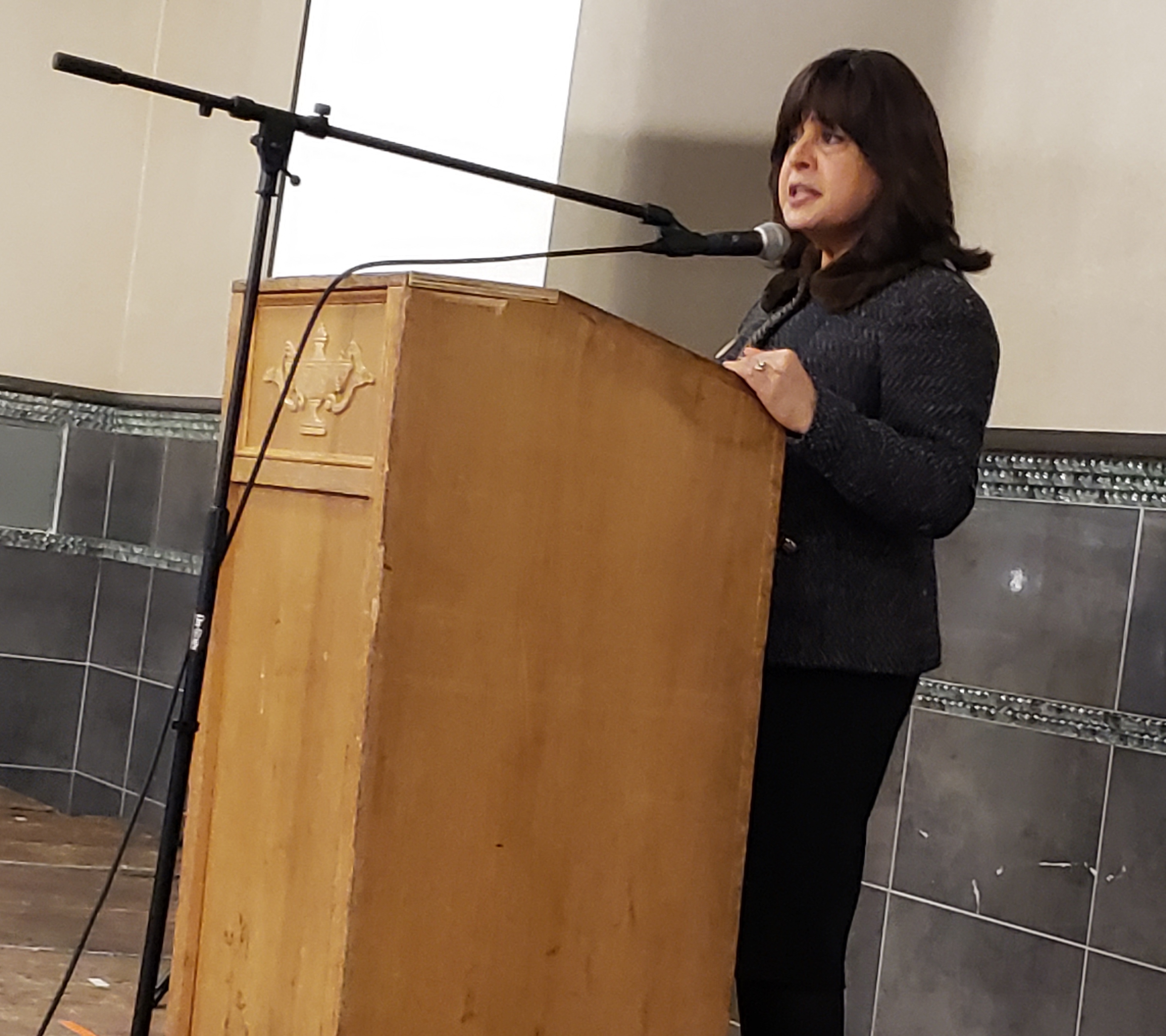
Spring ushered in a new set of lectures by two very different speakers. The Valley venue also changed, as Azzi and ALia Silkoff hosted the event for the first time in their home. On Sunday morning May 12, Rivka Malka Perlman of Baltimore spoke to the Valley women in a very spirited and well received lecture. Mrs. Perlman, whose background is in the field of kiruv, currently serves as a life coach. She spoke of unconditional love and acceptance of each other's shortcomings in life. No man, no woman is perfect, nor should one be expected to be so. Emunah is a key factor in sustaining a marriage, guided by the realization that we must grow spiritually. Mrs. Perlman gave examples of her own life and how she and her husband handled certain situations that were thrust upon them.
Mrs. Perlman repeated her lecture on Monday night May 13 at Nessah Synagogue to a packed audience of women. Many people stayed afterwards for chizuk and blessings from the speaker.
Rabbi Efraim Stauber came in from Israel to speak to the Valley men on Monday night May 13 at the Silkoff home. Rabbi Stauber, who lives in Givat Ze'ev, is very involved with couples as a marriage counselor. He also engages people in his new online eKehilla.com with divrei torah and a spirited exchange of ideas from members of the online group. One of the more humorous and enlightening examples that Rabbi Stauber presented was a case of a woman who gives a long speech of flowering praise to her husband before asking him to take out the garbage. Any man, he intimated, would do that for their wife after such a rousing ego-building preamble. It should be understood, stated Rabbi Stauber, that every time a wife asks her husband to do something for her, that she is giving over that same flowering praise without saying it directly. A man should be honored to provide for his wife in any arena.
Rabbi Stauber's Tuesday night lecture at Nessah Synagogue followed the same course which was followed by everyone davening maariv together and multiple one-on-one consultations afterwards.
2019 is off to a great start with hundreds more people dedicating themselves to strengthening their shalom bayis and that of the community at large.
November 2018
Three Ways Of Keeping Your Love Alive
Early November ushered in a bit of fall weather. With the chill came a pair of warm lectures on the topic of "Three ways to keep your love alive". Jackie Bitton, a girls' school principal in New York and a featured Ohr Naava speaker, gave a spirited talk to the women. The overwhelming theme was the way one should show empathy for their spouse. At one point in the speech, Rebbetzin Bitton pointed out how she had a brother with a terminal illness, and the sensitivity that he had towards others. How much more so should we have sensitivity towards our own spouses! Mixing laughter and true life stories, Mrs. Bitton brought the audience to their feet at the end of her lecture at Nessah Synagogue in Beverly Hills.
Rabbi Nachman Seltzer, author of 30 books, flew in from Israel to address the men. Along the lines of empathy, Rabbi Seltzer brought forth the story of Rachel and Yaakov in the Torah. Rachel cries out to Yaakov that she is childless and begs her husband to give her a child, citing that without children she cannot go on living. Yaakov tersely responds that he is not G-d, and cannot govern whether or not she can have children. Rabbi Seltzer pointed out that our sages chastise Yaakov for his lack of sensitivity in responding to Rachel. Hers was not a call to action, but rather a cry for empathy, for a caring ear to listen. Sometimes, Rabbi Seltzer pointed out, there is no real solution for a situation. But a loving and understanding response will often suffice.
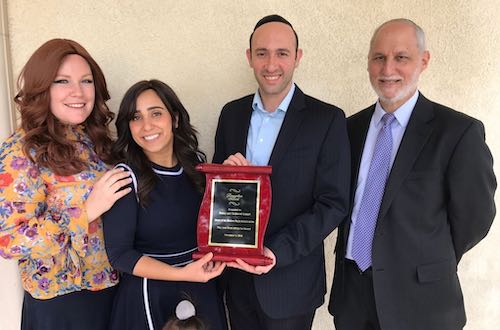
The tandem of speakers were hosted in the Valley once again by Danny and Yocheved Gohari. Dr. Stoll presented them with a plaque in appreciation of their hosting all three 2018 shalom bayis lectures. Just as was the case in July, there was literally a packed house for both the women's and men's sessions.
There has been an overwhelming response to the 2018 lecture series on shalom bayis. Numerous people have reached out to us at My Shalom Bayis to express their heartfelt thanks for the lectures. People take notes, share them with friends, and discussions on the topics frequently flow for weeks after the events! All of the 2018 speakers have had people follow up with them on various aspects of shalom bayis.
July 2018
Intimacy: What Every Husband and Wife Needs To Know
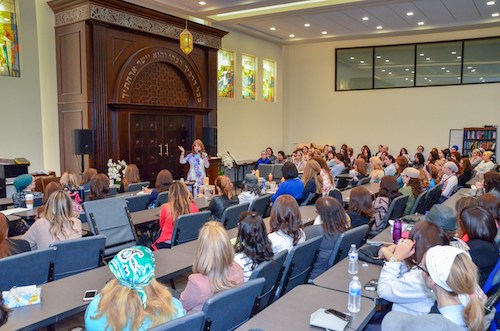
The theme for the July 2018 lectures was intimacy. This is a topic of great sensitivity, and we at My Shalom Bayis made sure to find the best speakers on the subject. A packed house of over 250 women filled the Adas Torah auditorium to hear Rochel Goldbaum of Denver deliver an emotional and informative speech on the topic. The speech was so well received that the question-and-answer period almost stretched to midnight! Listeners were encouraged to follow up with Rebbetzin Goldbaum, whose contact information was made available that evening. The buzz from the evening continued for the next several weeks.
The men's session was lead by Rabbi Moshe Kesselman, the ruv of Congregation Shaarei Tefila and an experienced chosson (groom) teacher himself. Rabbi Kesselman gave a checklist of points that a man must fulfill in order to reach his potential. These were not just halachic (Jewish commandment) obligations, but also very practical tips on ;how to approach intimacy with one's wife. As per the previous night's lecture, there was a great follow-up session with the rabbi. Indeed, several people reached out to Rabbi Kesselman in the weeks after the talk to continue the discussion.
In the Valley, Rebbetzin Goldbaum was received with as much warmth as her talk at Adas Torah. Hosts Danny and Yocheved Gohari opened their home to the women's talk as well as the men's lecture delivered by Rabbi Jonathan Rosenberg of Congregation Shaarey Zedek. Both lectures attracted a standing-room-only crowd with the same spirited response as the city lectures.
April 2018
Communicating with your spouse was the theme of the first set of My Shalom Bayis lectures.
Sunday, April 22nd, 2018 marked the initial talk featuring Rebbetzin Jackie Bitton speaking to a packed house of women at a private home in the Valley. The lecture was punctured by laughter, groans and copious note taking! Mrs. Bitton followed up that performance by speaking to a group of mikveh ladies the next afternoon and then delivered her showcase lecture to over 200 women at Adas Torah on Monday, April 23rd. Following the hard working Mrs. Bitton, was Rabbi Reuven Epstein, who spoke the very next evening, again at Adas Torah, to over 150 men. Rabbi Epstein riveted the audience with his meaningful stories and practical tips. Rabbi Epstein continued the next evening, Wednesday April 24th with a three hour slide show and lecture to singles at Adas Torah. The following Sunday, April 29th, Rabbi Moshe Kesselman, rav of Congregation Shaarei Tefila, gave an inspiring talk to the Valley men on how to affectuate proper shalom bayis.
Although the lectures were entertaining, their main message was educational. And that is the goal that My Shalom Bayis tries to achieve. The feedback from the events was off the charts! Please see the attached article from Jewish Home magazine that covered the events.